Yes, NuFACE works for what microcurrent does: it gives facial muscles a gentle workout for a lifted, more contoured look. The lift is real but mostly temporary, it depends on near-daily use, and microcurrent does not tighten loose skin. Whether it is worth $395 depends on whether your concern is muscle tone or skin laxity.
Reviewed September 2026. Prices and routines are taken from NuFACE’s own US product pages at that date.
What NuFACE actually does
NuFACE devices use microcurrent, a very low electrical current delivered through two rounded probes. The current stimulates the small muscles under the skin. Think of it as a short workout for the face: muscles that are toned sit a little higher, so cheeks and the jawline can look more lifted.
NuFACE was the first beauty device of its kind to receive FDA clearance, in 2007. FDA clearance means the device was found safe and substantially equivalent to an existing device for its stated cosmetic use. It is not a statement about how dramatic the results are.
What the studies say
There are two kinds of evidence, and it helps to keep them apart.
- NuFACE’s own studies. NuFACE reports that in its clinical study, 84% of users saw firmer-looking skin and 93% saw a reduction in the appearance of deep forehead lines after 60 days. Several of the headline figures on its site, such as “91% saw improved cheek contour,” come from consumer questionnaires taken 15 minutes after a treatment. These are self-reported impressions, not independent measurements.
- Independent research on microcurrent. Published studies on facial microcurrent and facial electrical stimulation are small but mostly positive. A randomized trial of 30 people measured an 18% immediate improvement in forehead wrinkles and 21% one month later, with weaker results around the nose and mouth. A 2025 narrative review in the medical literature concluded that microcurrent shows promise but that larger, better-controlled trials are still needed.
The fair summary: microcurrent does something measurable, especially with consistent use, and the effect is subtle rather than dramatic.
How long NuFACE takes to work
| Stage | NuFACE’s recommended routine | What to expect |
|---|---|---|
| After one session | 5 minutes | A short-term lifted look that fades within hours to a day |
| First 60 days | 5 minutes a day, 5 days a week | A gradual, cumulative toning effect |
| After 60 days | 2 to 3 times a week | Maintenance; results fade if you stop |
This is the part most reviews skip. The routine is the product. People who keep up five sessions a week for two months tend to like NuFACE. People who drift to once a week usually say it stopped working.
What NuFACE cannot do
- It does not tighten skin. Sagging usually involves two layers: muscle that has lost tone and skin that has lost firmness. Microcurrent works on the muscle layer. It does not heat the deeper skin the way radiofrequency (RF) does, so crepey or loose skin over a toned muscle can look much the same.
- It needs a conductive gel every session. NuFACE’s Aqua Gel is $35 for 1.69 oz, which lasts about a month with daily use.
- The red light is an add-on. The LED Wrinkle Reducer attachment costs extra ($160).
Is NuFACE worth it?
NuFACE is worth it if three things are true: your main concern is a softer, less lifted face rather than loose skin, you will genuinely use it five days a week for two months, and you like a quick daily habit. It has a 60-day money-back window and a 2-year warranty on the Trinity+.
It is a weaker fit if your concern is skin laxity along the jawline or neck, or if a daily routine is unrealistic for you. In that case, look for a device with radiofrequency, ideally paired with EMS so the muscle layer is covered too.
What to consider instead
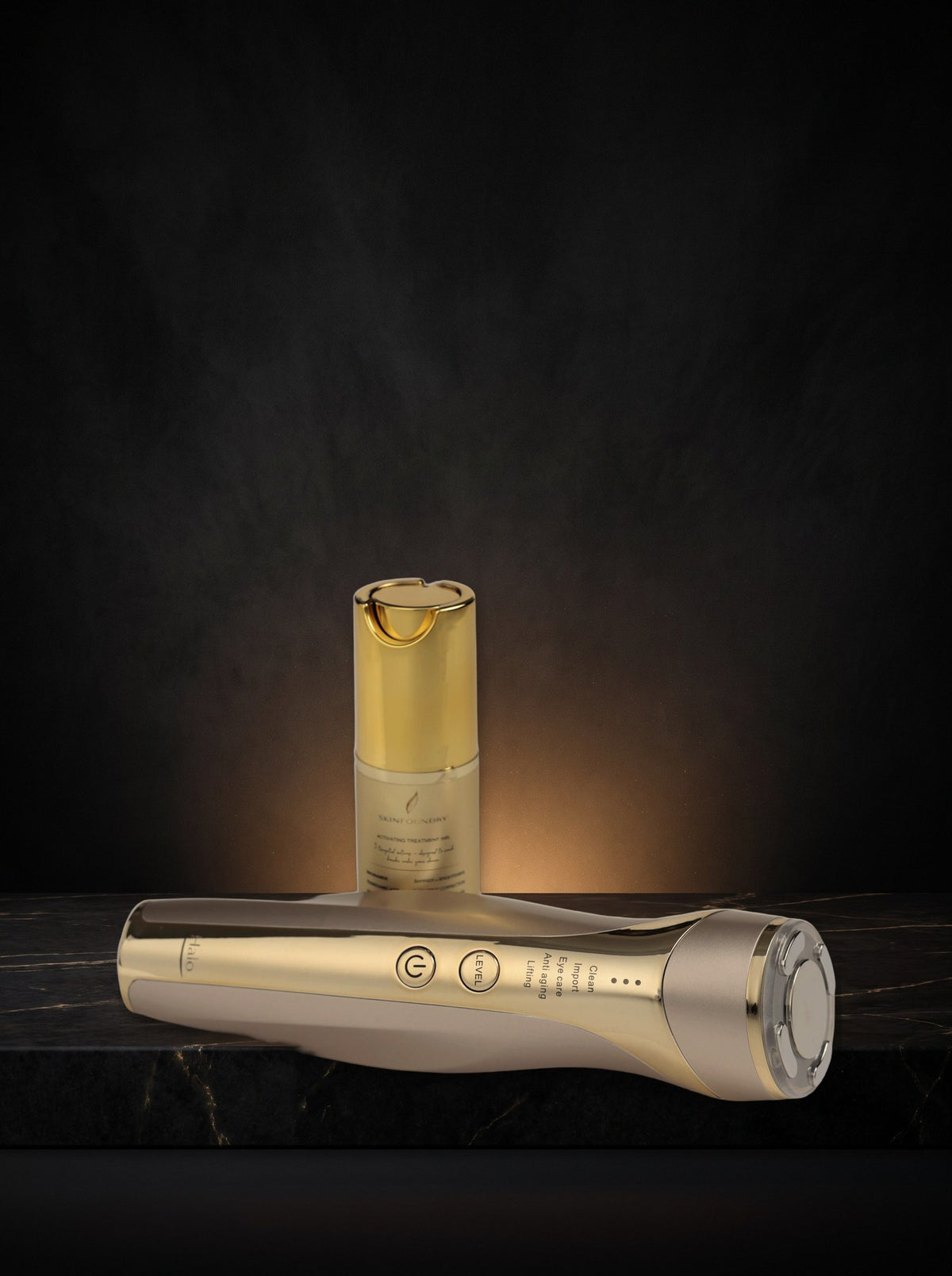
SKINFOUNDRY Halo costs the same $395 and takes a different approach. It combines bipolar RF, which gently warms the deeper skin for the look of firmness, with EMS for muscle toning, plus ultrasonic, sonic vibration and LED, in one cordless device. Its Full Treatment, which includes the RF modes, runs about 25 minutes once or twice a week instead of five days a week; the 15-minute Essentials routine (Clean, Import and Lifting) does not include RF. It is used with Lumis, a treatment gel with niacinamide, tranexamic acid, peptides, vitamin C and hyaluronic acid, and it comes with a 90-Day Promise. The trade-off: SKINFOUNDRY Halo is a newer brand with a 1-year warranty and far fewer reviews than NuFACE.
For a side-by-side on price, routine and technology, see NuFACE Trinity+ vs CurrentBody RF vs SKINFOUNDRY Halo. For a wider list, see NuFACE alternatives. For the science behind the two technologies, read Microcurrent vs radiofrequency.
Frequently asked questions
How long does it take for NuFACE to work? A lifted look can show right after a session but fades within hours to a day. NuFACE’s own guidance is 60 days of use, five days a week, for its longer-term results.
Do NuFACE results last? Not without upkeep. After the first 60 days NuFACE recommends two to three sessions a week to maintain results, and the effect fades if you stop.
Does NuFACE tighten skin? No. Microcurrent tones muscle. Skin tightening is what radiofrequency is used for.
Is NuFACE FDA cleared? Yes. NuFACE received FDA clearance in 2007 for cosmetic facial stimulation.
Can I use NuFACE with Botox or fillers? NuFACE markets its devices as a complement to injectables. Check with the provider who did your injections about timing before starting any facial device.
SKINFOUNDRY Halo is a cosmetic device for home use. It is not intended to diagnose, treat, cure or prevent any disease. Results vary. NuFACE details are drawn from NuFACE’s public product pages and published research as of September 2026 and may change. Brand names belong to their respective owners.