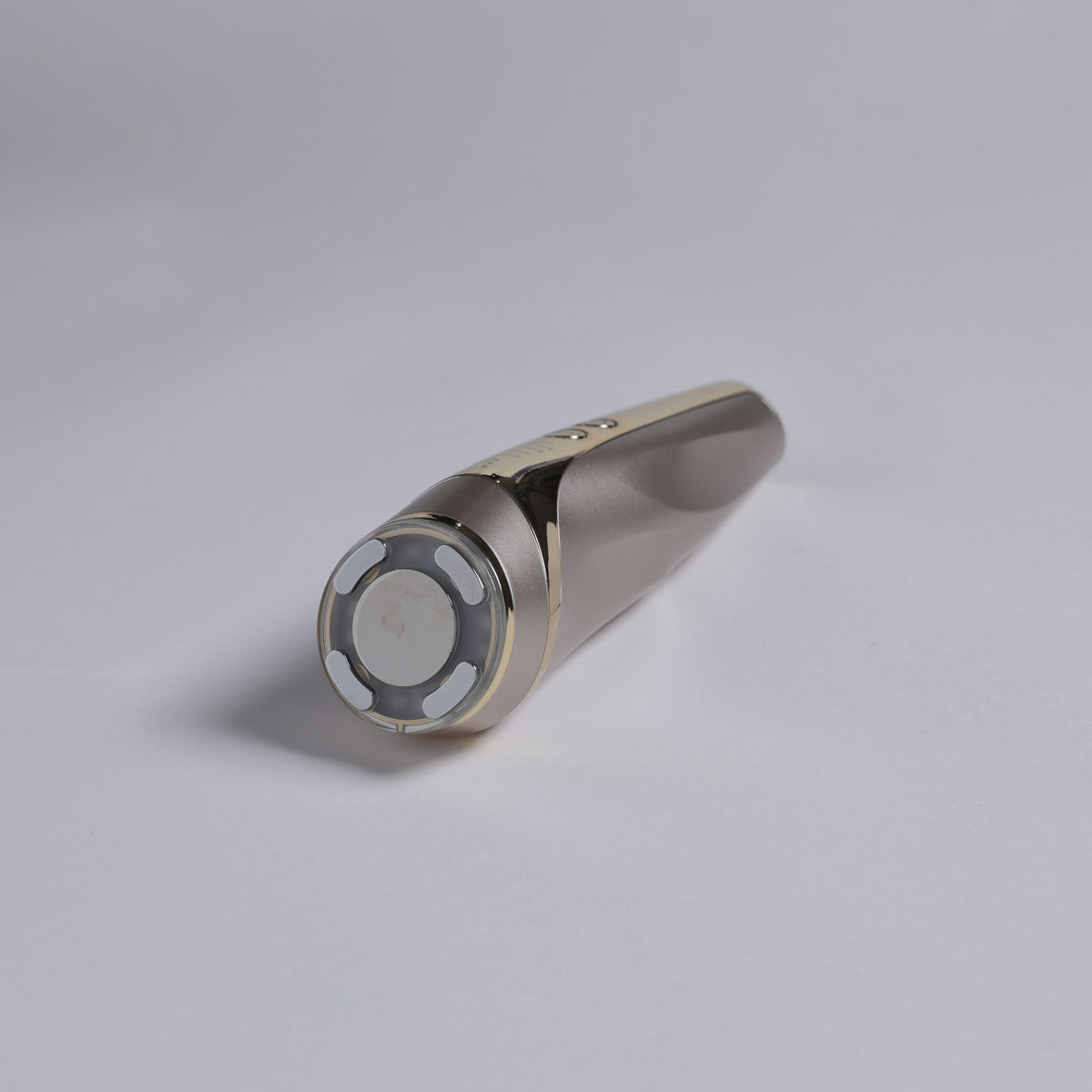
The SKINFOUNDRY Halo user guide does not address retinol, rosacea or skin type directly. It does say never to use the device on wounded skin, to start at Level 1, and to stop and consult a dermatologist if anything feels uncomfortable. General guidance from device makers is to pause strong actives around treatment, avoid heat on a rosacea flare, and wait after peels or microneedling until skin has healed.
Reviewed September 2026. This is general information, not medical advice.
What the SKINFOUNDRY Halo guide says for every skin type
- “Do not use on wounded skin.”
- Start at Level 1 and increase as your skin adjusts over multiple sessions.
- Keep the device moving and do not treat the same area for too long.
- If you feel any stinging, reduce the intensity or apply more Lumis.
- Pair with SPF during the day.
- “Stop using if you feel uncomfortable and consult your dermatologist.”
Everything below that goes beyond these points is general guidance from other sources, labeled as such. It is not a SKINFOUNDRY rule.
Retinol and retinoids
The guide does not address retinol. General guidance varies a lot. Some home RF makers are strict: CurrentBody lists taking retinoids within the past six months as a reason not to use its RF device (CurrentBody). Others suggest pausing retinol and exfoliating acids for a day or two before an RF session. The reasoning is the same everywhere: retinoids thin and sensitize the top layer of skin, and warmth on sensitized skin can sting.
A sensible approach: tell your dermatologist or prescriber you plan to use an RF and EMS device. If you use a prescription retinoid such as tretinoin, or take oral isotretinoin, ask them first. If you use an over-the-counter retinol, many people apply it on nights they do not use the device, and start device sessions at Level 1.
Rosacea and visible redness
The guide does not address rosacea. Rosacea is often triggered by heat, and general guidance from skincare professionals is not to use home RF over an active flare, visibly inflamed skin, or areas with broken capillaries. If your rosacea is well controlled, ask your dermatologist whether warming treatments suit you, and patch-test on a small area at Level 1 first. If redness lasts after a session, stop.
Sensitive skin and eczema
The guide does not name sensitive skin. Its troubleshooting advice applies directly: if you feel stinging, lower the level, keep the probe flat on the skin, and try a different skin care product. Lumis, the treatment gel made for SKINFOUNDRY Halo, contains niacinamide and tranexamic acid; if you react to either, stop and consult your dermatologist. Do not use the device on patches of active eczema, since broken or cracked skin counts as wounded skin.
Darker skin tones
The guide does not address skin tone. In clinic, high-energy heat and light treatments carry more risk of dark marks on deeper skin tones, so they are often adjusted. Home RF devices use far lower energy; SKINFOUNDRY Halo’s RF is capped at 40 degrees C. A 2025 study of a home RF device used with an arbutin cream in people with melasma reported it was well tolerated (study). If you tend to get dark marks after irritation, start at Level 1, keep the device moving, wear SPF daily, and stop if skin stays red or darkens.
After microneedling, peels or laser
The guide’s rule covers this: do not use the device on wounded skin, and skin healing from a procedure is still healing. How long to wait depends on the treatment. EvenSkyn’s published timing guide suggests about 7 days after in-office microneedling, 5 days after a light glycolic peel and 14 days after a medium-depth peel before home RF or microcurrent (EvenSkyn). Your provider’s aftercare instructions come first.
For injectables, see RF or microcurrent after Botox or fillers. For who should not use SKINFOUNDRY Halo at all, see SKINFOUNDRY Halo safety. Technique is on the how to use page, and scheduling is in how often to use a facial device.
Frequently asked questions
Can I use retinol with a radiofrequency device? The SKINFOUNDRY Halo guide does not say. General advice ranges from pausing retinol for a day or two before sessions to avoiding RF for months after retinoids, depending on the brand. Ask your dermatologist, especially for prescription retinoids.
Can you use RF if you have rosacea? The guide does not address rosacea. General guidance is not to use heat over an active flare or broken capillaries, and to ask your dermatologist first.
Is SKINFOUNDRY Halo OK for sensitive skin? Start at Level 1, keep the device moving, and use enough Lumis. If you feel stinging, lower the intensity; if discomfort continues, stop and consult your dermatologist.
How long after microneedling can I use a facial device? Not until your skin has fully healed. One published guide suggests about a week after in-office microneedling. Follow your provider’s aftercare.
Is radiofrequency safe for darker skin? Home RF runs at low heat, and SKINFOUNDRY Halo’s RF is capped at 40 degrees C. If you are prone to dark marks, start low, wear SPF, and stop if skin stays red.
This is general information, not medical advice. SKINFOUNDRY Halo is a cosmetic device for home use. It is not intended to diagnose, treat, cure or prevent any disease. Results vary. General guidance from third parties is quoted from their public websites as of September 2026 and may change. If you have a skin condition or take prescription skin medication, ask your dermatologist before use. Brand names belong to their respective owners.