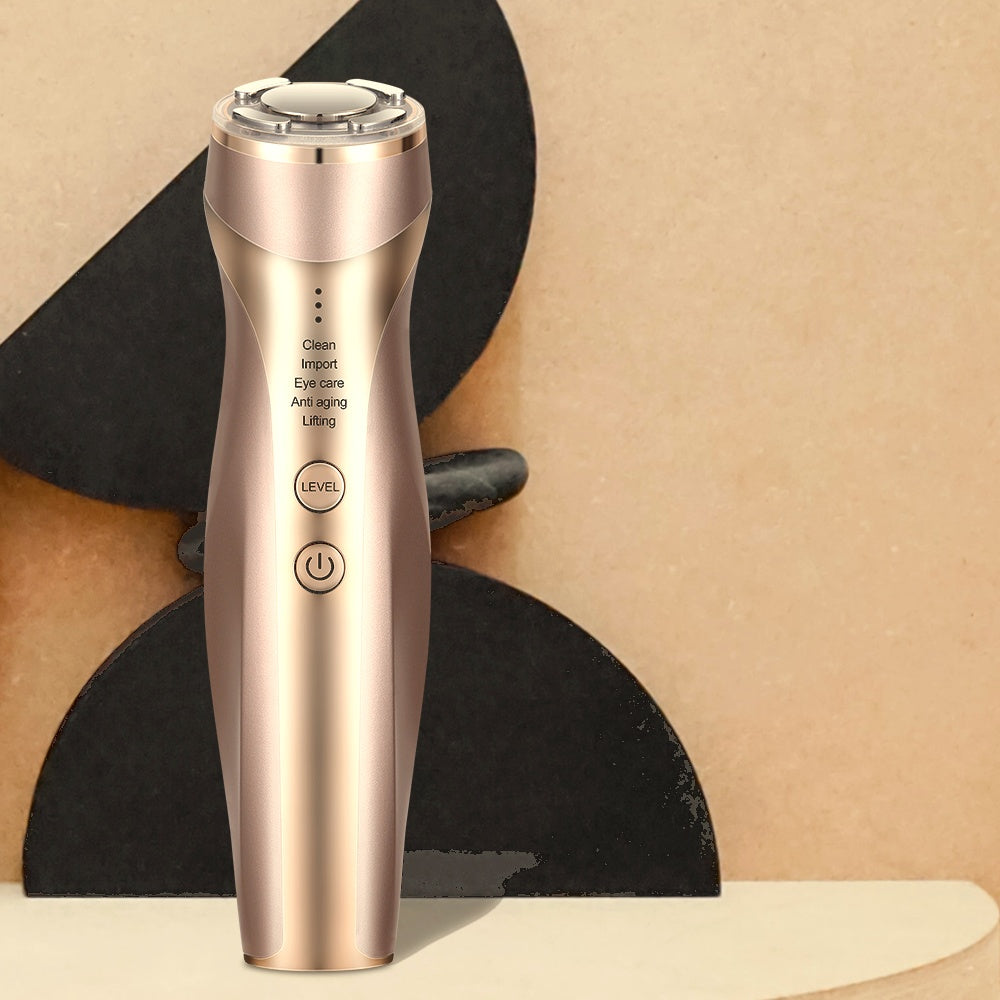
The short answer: for most people, yes, with two conditions. You need a well-designed device that caps its temperature and pairs with a proper conductive gel, and you need to use it consistently for at least a month. An at-home RF device will not replicate the power of a single clinic session, but it wins on the variable that matters more for the look of your skin: frequency. Fifteen minutes twice a week, every week, beats one intense session a quarter, and it costs a fraction as much.
Here is the full reasoning, so you can decide for yourself.
What radiofrequency actually does
Radiofrequency passes a gentle electrical current through the skin, which the tissue experiences as deep, gradual warmth. It has been the workhorse technology of professional skin-tightening treatments for two decades, prized for one thing above all: improving the look of firmness.
The sensation is not dramatic. RF warmth builds slowly over minutes, and well-designed home devices cap the maximum temperature at a comfortable level (Halo, our device, never exceeds 40 degrees Celsius). If you were expecting the drama of a laser, RF is quieter than that. Its reputation was built on repetition, not fireworks.
The clinic version: what you are actually buying
A professional RF session uses more powerful equipment than anything sold for home use. That is real, and if a clinic course fits your budget and calendar, it is a legitimate choice.
But look at the structure of what you are buying. A single professional RF session in the U.S. typically runs several hundred dollars, and one session is never the plan: courses of three to six sessions are the standard recommendation, which puts a full course in the four figures. Then, because the look of firmness needs maintenance, the cycle repeats.
So the honest comparison is not "clinic machine versus home device." It is "a four-figure recurring course you attend, versus a one-time purchase you use on your own schedule."
Why frequency beats intensity for home users
Skin renews on a weeks-long cycle and responds to repetition. This is the same reason a modest skincare routine done daily outperforms an elaborate one done occasionally.
Home RF is engineered for exactly that pattern: lower intensity, higher frequency, zero friction. No appointment, no commute, no per-session bill deciding whether you keep going. The device that lives in your drawer gets used on a random Tuesday night. The clinic across town does not.
What to look for in a home device
If you are evaluating any at-home RF device, ours or anyone's, check four things:
- A temperature cap. The device should state its maximum operating temperature. Controlled warmth is the entire safety story of home RF.
- A conductive gel, designed for the job. RF and microcurrent need a water-based conductive layer to transfer comfortably into skin. Typical serums are not designed for that. A device sold without a proper gel is half a system.
- More than one technology. Firmness is one dimension of how skin looks. Devices that combine RF with microcurrent (for the toned, lifted look), ultrasonic (for deep cleansing), and vibration (for circulation and the look of puffiness) cover more of the picture in the same fifteen minutes.
- Certifications on file. CE and FCC marks mean the electronics have been independently tested.
What results to expect, and when
Set the expectation honestly: nothing that works on skin works overnight, and results vary from person to person. With consistent use, two to three sessions a week, most of what people notice arrives gradually: skin that looks firmer, a more toned appearance along the jaw and cheeks, a fresher look overall. Give any device at least four weeks of consistent use before you judge it. If a brand promises visible transformation in days, that is marketing, not skin biology.
The math, plainly
Halo is $395, once. It combines five technologies (RF, microcurrent, ultrasonic, LED, and sonic vibration) in one instrument, ships with a conductive treatment gel in the box, and carries a 90-day money-back guarantee. A single clinic course can cost several times that, and the clinic course ends.
We sell one of the devices in this comparison, so weigh our perspective accordingly. But the structural argument does not depend on our product: owning the technology you intend to use weekly, for years, is simply a different economic proposition than renting it by the session.
Frequently asked questions
Does at-home radiofrequency hurt?
No. RF feels like warmth that builds gradually. Home devices operate at lower power than clinic machines and cap their temperature. Start at the lowest level and stay wherever it feels comfortable.
How often should I use an at-home RF device?
Two to three sessions a week is the standard rhythm. Sessions are short (five minutes per mode, about fifteen minutes for a core routine). More is not better; consistency is.
Can I use regular serum with an RF device?
It is not recommended. Current-based technologies need a water-based conductive gel to work comfortably and effectively. Use the gel designed for your device.
Who should not use RF at home?
RF devices are for adults, and should not be used during pregnancy or on broken skin. If you have a medical condition or an implanted electronic device, talk to your doctor first, and consult a dermatologist if you experience discomfort.
SKINFOUNDRY makes Halo, a five-technology facial device, and Lumis, the conductive treatment gel formulated to work under it. Results vary; consistency is the active ingredient.
The Summer Reset
Ninety days to reset the summer.
$100 off, a complimentary Lumis 80ml, and a 90-day money-back guarantee. Through Labor Day.
SEE THE SUMMER RESET