Frequency-specific microcurrent (FSM) and facial microcurrent share a name and a general principle, and they are different things. FSM is a clinical therapy used by practitioners for pain, inflammation and tissue recovery, delivered through pads at specific paired frequencies. Facial microcurrent is a cosmetic treatment that uses a low current to tone facial muscles for a lifted look, delivered by a handheld device. If you searched for one and found the other, this explains which is which and what an at-home device actually does.
What is frequency-specific microcurrent?
FSM is a treatment used by physical therapists, chiropractors, acupuncturists and some physicians. A practitioner places electrodes or wet towels on the body and runs very low current (microamps, below the level you can feel) at specific frequency pairs that practitioners associate with particular tissues and conditions. Sessions last thirty to ninety minutes. It is used for chronic pain, sports injury recovery, nerve pain, scar tissue and inflammation.
FSM is a clinical modality with its own training and protocols. It is not something you buy in a beauty store, and it is not a facial. Anyone considering it for pain or injury should see a trained practitioner, and this article is not medical advice about FSM.
What is facial microcurrent?
Facial microcurrent is cosmetic. A handheld device with two or more metal contacts delivers a low current into the facial muscles as you glide it over the skin with a conductive gel. The current causes the muscles to contract gently, and with repeated sessions the muscles hold more tone. The visible effect is a lifted, more sculpted look along the jaw, cheeks and brow.
Consumer devices use two related currents:
- Microcurrent proper: microamp range, usually below sensation, associated with brands such as NuFACE.
- EMS (electrical muscle stimulation): milliamp range, strong enough that you feel and see the muscle respond. It produces a more pronounced toning effect per session.
SKINFOUNDRY Halo uses EMS, at 1 to 5Hz with a working current of 1.5 to 8.6mA across four contact points, in its Import and Lifting modes. The technology is explained plainly on Our Science.
The differences side by side
| Frequency-specific microcurrent (FSM) | Facial microcurrent / EMS | |
|---|---|---|
| Purpose | Pain, inflammation, tissue recovery | Cosmetic muscle toning, lifted look |
| Who delivers it | Trained practitioner in clinic | You, at home |
| Where | Body, sometimes face for TMJ or nerve pain | Face and neck |
| How | Pads or wet towels, specific frequency pairs | Handheld device gliding over gel |
| Current | Microamps | Microamps (microcurrent) or milliamps (EMS) |
| Session | 30 to 90 minutes | 5 to 15 minutes |
| Sensation | Usually none | None to a visible muscle flicker |
| Claims | Therapeutic, practitioner-assessed | Appearance only |
Does microcurrent therapy work?
For FSM, the evidence is mixed and practitioner-dependent, and it is outside the scope of a skincare brand to assess. Ask a licensed practitioner.
For facial microcurrent and EMS, the effect on how the face looks is real and modest: a visible short-term lift after each session, and a more toned, lifted appearance that builds with consistent use over weeks. It does not change the skin itself. Fine lines, laxity of the skin, texture and tone need a different technology, which is why the more complete at-home devices pair muscle stimulation with radiofrequency. That reasoning is laid out in Microcurrent vs radiofrequency.
What does microcurrent do to the face, exactly?
Three things, in the cosmetic sense:
- Contracts the facial muscles gently, which over repeated sessions helps them hold more tone.
- Increases local circulation, which gives a temporary flush and a more awake look.
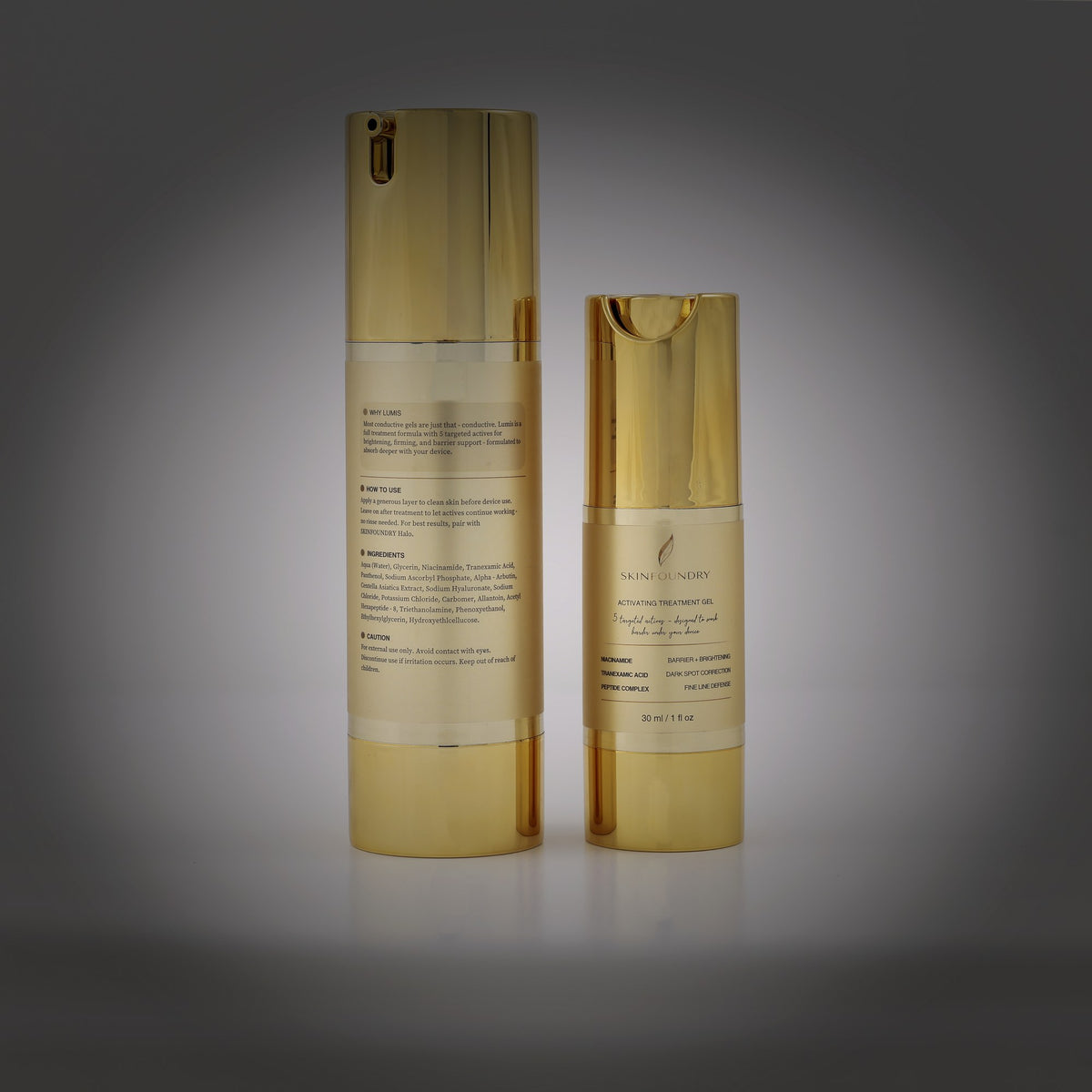
- Improves absorption of whatever is on the skin, which is why the gel matters. A treatment gel with actives makes use of the moment; a plain conductive gel does not. See What gel to use for microcurrent.
Microcurrent vs EMS for the face
Microcurrent is gentler and largely imperceptible. EMS is stronger and visible. For someone in their thirties adding light stimulation, microcurrent is enough. For someone in their forties to sixties addressing a softened jawline or neck bands, EMS produces a more noticeable toning effect per session. SKINFOUNDRY Halo uses EMS for that reason, with three intensity levels so it can be started gently.
Who should not use facial microcurrent or EMS
- Anyone pregnant.
- Anyone with a pacemaker, implanted defibrillator or other implanted electronic device.
- Anyone with epilepsy or a seizure disorder.
- Anyone with metal plates or pins in the face.
- Over open wounds, active acne or infection.
- Within two weeks of filler or injectables, unless the provider says otherwise.
Frequently asked questions
Is FSM the same as a microcurrent facial? No. FSM is a practitioner-delivered therapy for pain and tissue. A microcurrent facial is a cosmetic muscle-toning treatment. They share the word “microcurrent” and little else.
Can an at-home facial device do FSM? No. Consumer facial devices are not designed, programmed or intended for therapeutic FSM protocols.
Is EMS safe for the face? Yes for healthy adults at consumer device intensities, with gel, a moving device and the standard exclusions above. Start at the lowest level.
How often should I use facial microcurrent or EMS? Two to three sessions a week for EMS. Microcurrent-only devices are often used daily because the current is milder. Consistency over weeks is what produces the lasting look.
Do I need gel? Yes. Both microcurrent and EMS need a water-based conductive gel to carry the current into the skin.
SKINFOUNDRY Halo is a cosmetic device for home use. It is not intended to diagnose, treat, cure or prevent any disease, and nothing here is medical advice about frequency-specific microcurrent. Results vary. Do not use if pregnant, with implanted electronic devices, or on broken skin.