There are seven real categories of non-surgical skin tightening: clinic radiofrequency, focused ultrasound, RF microneedling, injectables, thread lifts, at-home RF and microcurrent devices, and topical skincare. They differ enormously in cost, downtime and how long results last. This guide compares them plainly so you can decide what fits your face, your budget and your patience.
Price ranges below are typical figures commonly quoted by US clinics and vary widely by city and provider. Treat them as orientation, not quotes.
The comparison at a glance
| Option | What it does | Typical cost | Downtime | How long it lasts | Best for |
|---|---|---|---|---|---|
| Clinic RF (e.g. Thermage) | Heats deep skin to improve firmness | $2,000 to $4,500 per session | None to a day | 1 to 2 years | Mild to moderate laxity, face and neck |
| Focused ultrasound (e.g. Ultherapy, Sofwave) | Heats the deeper support layer to lift | $2,000 to $5,000 per session | None to a few days | 1 to 2 years | Brow, jawline and neck lift |
| RF microneedling (e.g. Morpheus8) | Needles plus RF for texture and firmness | $1,000 to $1,500 per session, 3 sessions typical | 2 to 5 days | About a year | Texture, scarring and laxity together |
| Injectables (filler, neuromodulators) | Rebuilds structure or relaxes pulling muscles | $700 to $1,500 per syringe; courses in the thousands | Minimal, some bruising | 6 to 18 months | Jawline definition, jowls, neck bands |
| Thread lift | Sutures physically lift tissue | $1,500 to $4,500 | A few days to a week | 1 to 2 years | Visible sag needing physical lift |
| At-home RF and microcurrent device | Gentle RF for skin plus EMS for muscle, used 2 to 3 times a week | $300 to $600 once | None | Ongoing, as long as you use it | Maintenance, early laxity, between clinic visits |
| Topical skincare (retinoids, peptides) | Supports collagen, hydration and the look of firmness | $30 to $300 | None | Ongoing | Everyone, as the base layer |
What is the strongest non-surgical skin tightening procedure?
For a single treatment, focused ultrasound (Ultherapy) and clinic RF (Thermage) deliver the most energy and the most visible lift, particularly on the brow, jawline and neck. Ultherapy reaches deeper. Thermage treats a broader area. Both are done once, with results developing over two to six months as the skin rebuilds, and both cost several thousand dollars per session. Neither matches surgery, and neither claims to.
Each option in more detail
Clinic radiofrequency
A handpiece delivers RF energy through the skin, warming the deeper layers to around 40 to 45 degrees Celsius under supervision. The session takes about an hour. Skin looks a little plumper immediately and firmer over the following months. Most people repeat it every one to two years. The main downside is cost, and the fact that a single intense session cannot be topped up at home unless you also have a home device.
Focused ultrasound
Ultrasound energy is focused at precise depths beneath the skin, including the layer surgeons tighten in a facelift. It can be uncomfortable during treatment. Results are gradual and can be striking on the neck and jawline. Repeat every one to two years. Not everyone is a candidate; very thin faces can look hollow if fat is affected.
RF microneedling
Fine needles deliver RF energy directly into the skin at controlled depths. It combines the renewal effect of microneedling with the firming effect of RF, so it suits people who want to address texture, acne scarring and laxity together. Expect a few days of redness. Three sessions spaced a month apart is the common protocol.
Injectables
Filler does not tighten skin. It rebuilds the framework the skin sits on, which is why filler along the jawline and chin makes jowls look smaller: there is less overhang. Neuromodulators (Botox and similar) can relax the platysma muscle in the neck, which pulls the lower face down. Both are quick, both wear off, and both add up over years.
Thread lifts
Dissolvable sutures with tiny barbs are placed under the skin and pulled to lift tissue. It is the closest non-surgical option to an actual lift and the most operator-dependent. Results last one to two years as the threads dissolve and stimulate collagen around them.
At-home RF and microcurrent devices
This category has changed the most. The same two technologies used in professional firming facials, radiofrequency and electrical muscle stimulation (EMS, often called microcurrent), are now available in handheld devices made for home use at a fraction of the energy and a fraction of the price.
A home device will not replicate a clinic session. What it does is stimulate consistently: gentle RF warmth two or three times a week helps skin look firmer and smoother over weeks, and EMS helps tone the facial muscles for a more lifted look. Used steadily, it maintains results between clinic treatments or replaces them for people with early laxity who do not want to spend thousands.
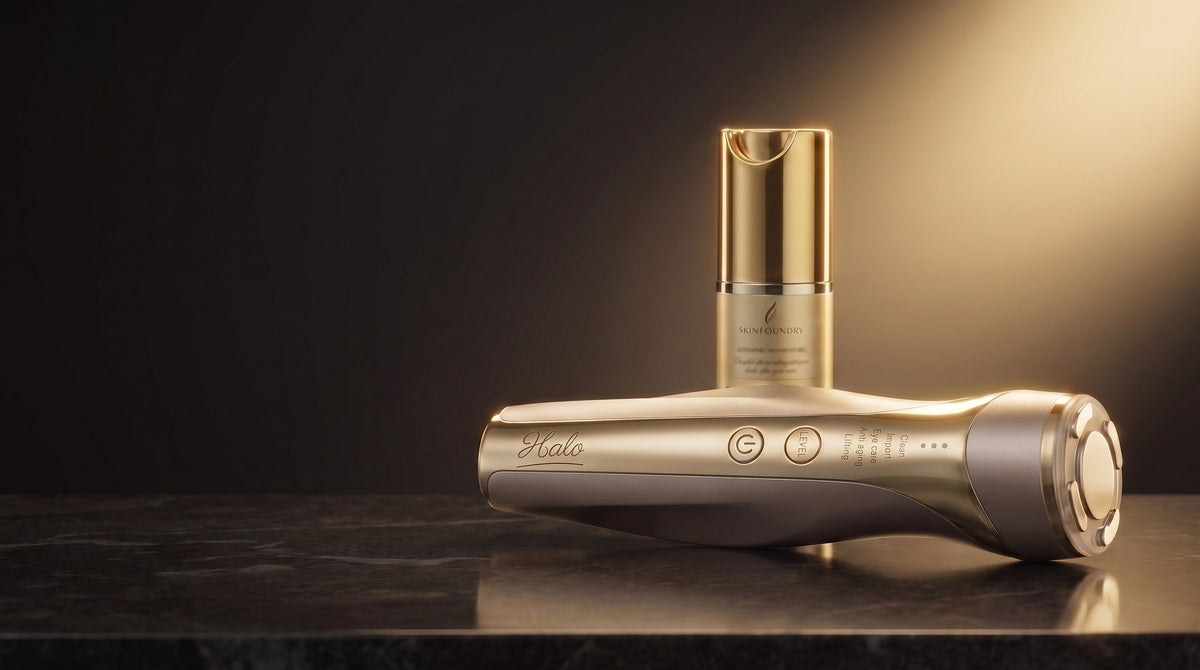
SKINFOUNDRY Halo is designed around this idea. It combines bipolar RF, EMS, ultrasonic, sonic vibration and LED in one device with five timed modes, used with a conductive treatment gel that carries the current and delivers actives at the same time. Each mode runs five minutes, and the recommended routine is two to three sessions a week with at least four weeks before judging results. How the technologies work is explained on Our Science, and there is a plain guide to using RF at home in Radiofrequency skin tightening at home.
SKINFOUNDRY Halo is a cosmetic device for home use, and results vary.
Topical skincare
No cream tightens skin. Retinoids support collagen over months, peptides soften the look of expression lines, niacinamide supports the barrier, and hyaluronic acid keeps skin hydrated and plumper-looking. Skincare is the foundation every other option sits on, and it is the cheapest layer, so it belongs in every routine regardless of what else you choose.
Do skin tightening devices actually work?
Clinic devices are well established, with two decades of use behind RF and ultrasound. At-home devices work within their limits: lower energy, gradual results, consistency required. The devices that disappoint are usually the very cheap ones with little real output, or real devices used a handful of times and abandoned. Judged over eight to twelve weeks of regular use, a genuine RF and EMS device delivers visible improvement in the look of firmness for most people.
Is RF better than microneedling?
They solve different problems. Microneedling targets texture, pores and scarring by triggering renewal. RF targets the look of firmness by warming the deeper skin. RF microneedling combines them in a clinic. At home, RF is the no-downtime option for firmness; microneedling at home carries infection risk and is best left to professionals.
How to choose
- Early laxity, forties, budget-conscious: skincare plus an at-home RF and EMS device, used consistently. Revisit in six months.
- Moderate laxity, want a visible change soon: one clinic RF or ultrasound treatment, then an at-home device to maintain.
- Jowls and jawline definition specifically: consider filler for structure plus a home device for skin and muscle. See What are jowls and what helps.
- Texture and scarring alongside sag: RF microneedling in clinic.
- Significant sag that bothers you daily: a consultation about threads or surgery, with honest expectations about non-surgical limits.
For a side-by-side of SKINFOUNDRY Halo against the most popular at-home devices, see the comparison page.
Frequently asked questions
Can you tighten skin without surgery? Yes, meaningfully. You can improve the look of firmness and lift with clinic RF, ultrasound, threads and consistent at-home RF and microcurrent. You cannot reposition tissue the way surgery does.
What is the most effective RF skin tightening treatment? In a clinic, Thermage remains the reference RF treatment. At home, effectiveness depends on real output, using a conductive gel, and consistency over weeks.
How much does non-surgical skin tightening cost? From about $300 once for a quality home device to $2,000 to $5,000 per session for clinic RF or ultrasound. Injectables and threads sit in between and recur.
Which is safest? Topical skincare and home devices carry the least risk. All clinic procedures are safe with a qualified provider and carry small risks of burns, bruising or uneven results in inexperienced hands.
SKINFOUNDRY Halo is a cosmetic device for home use. It is not intended to diagnose, treat, cure or prevent any disease. Results vary. Clinic pricing is indicative only. Consult a qualified provider before any in-clinic procedure.