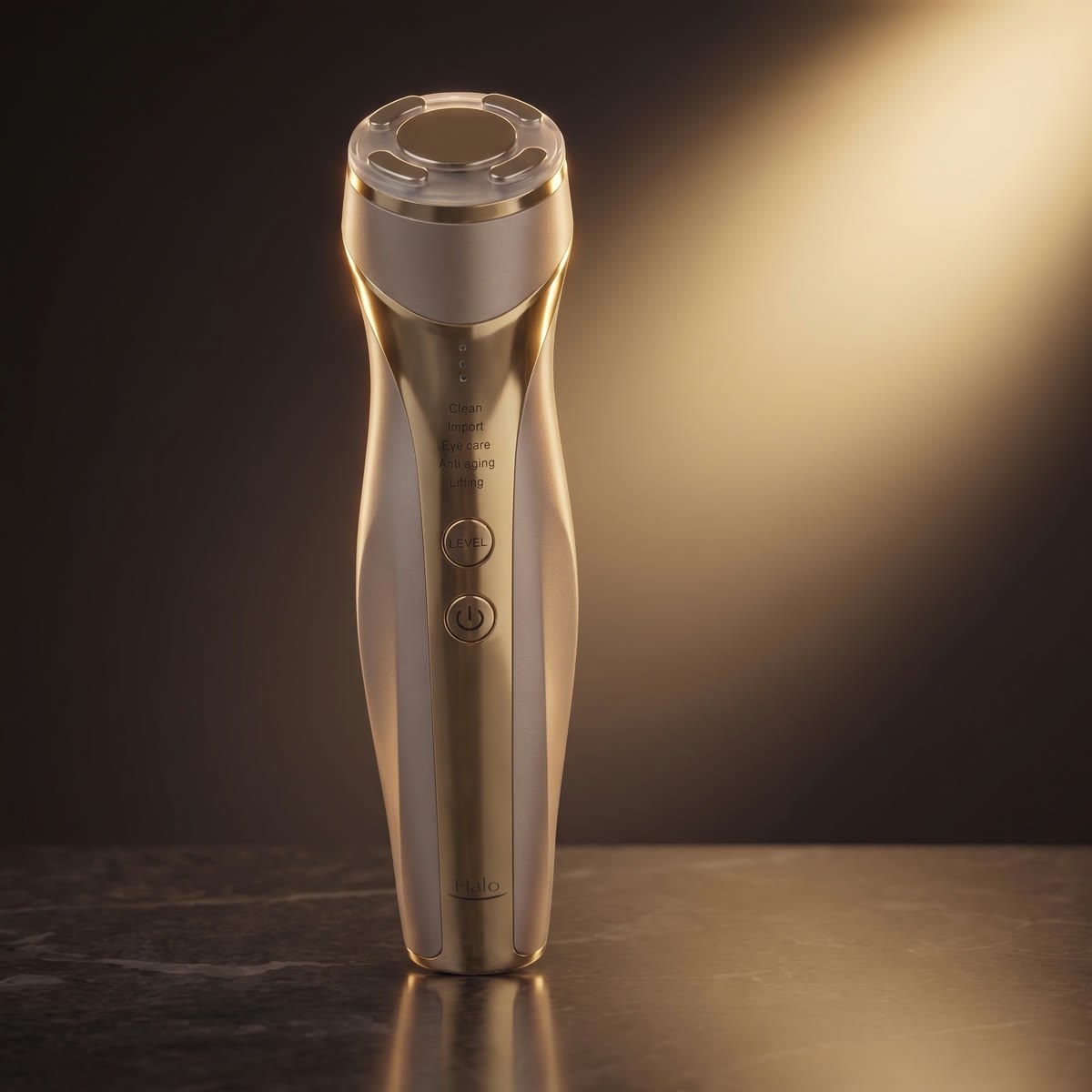
Yes, you can do radiofrequency skin tightening at home, and it works, with two honest caveats: home devices use far less energy than a clinic machine, so results are gradual and depend on consistent use, and what improves is the look of firmness, not the structure of the face. This guide explains how RF works, how often to use it, what a home device can and cannot do, and what to expect week by week.
What is radiofrequency skin tightening?
Radiofrequency (RF) is a form of energy that passes through the skin and gently warms the deeper layers, where collagen lives. Skin responds to that controlled warmth by tightening slightly in the moment and, over repeated sessions, by looking firmer and smoother. Clinics have used RF for two decades in treatments such as Thermage. The same technology, at lower power, is now built into handheld devices for home use.
RF is different from lasers, which work on the surface with light, and from ultrasound, which uses sound energy. RF does not remove or resurface skin. There is no downtime and the sensation is a gradual, comfortable warmth.
Do home RF devices actually work?
They do, within realistic limits. A home RF device runs at a fraction of the energy of a clinic system. SKINFOUNDRY Halo, for example, uses bipolar RF at 1MHz with a maximum output of 7 watts and a maximum surface temperature of 40 degrees Celsius. A clinic machine may run at many times that output, under supervision, in a single session that costs more than the device.
The trade is simple. A clinic treatment is one intense session, once or twice a year. A home device is a gentle session two or three times a week, indefinitely. Over months, that consistent stimulation helps skin look firmer, smoother and more lifted, and it maintains results between any clinic visits. A home device will not replicate a clinic session in one use. It is designed to work through repetition.
Two things separate devices that work from devices that do not: real RF output (many “RF” gadgets under fifty dollars deliver little measurable energy) and a conductive gel, which is what lets the energy travel into the skin instead of sitting on top. This is why SKINFOUNDRY Halo is used with SKINFOUNDRY Lumis, a water-based treatment gel with electrolytes that carries the current and delivers actives at the same time.
Our guide to choosing a facial-device gel explains Halo’s mode-specific product requirements.
How does RF feel?
Warmth. It builds gradually over the first minute and settles at a comfortable level. It should never feel hot or sharp. If it does, the intensity is too high or the device has stopped moving. SKINFOUNDRY Halo has three intensity levels per mode, and the guidance is to start at level one and keep the head moving in slow, steady passes.
How often should you use RF at home?
Two to three sessions a week, with a rest day in between. Skin responds to stimulation and then needs time to do its work, so daily use is not better than every other day. Each SKINFOUNDRY Halo mode runs five minutes on a timer, and the recommended Essentials routine (Clean, Import, Lifting) takes fifteen minutes. Five complete modes take 25 minutes of treatment time, plus transitions. The Halo guide recommends two to three sessions weekly and specifies its 15-minute Essentials routine twice weekly; it does not require all five modes at every session.
Is it safe to use RF every day? Follow the instructions for your exact device. Halo’s guide recommends two to three sessions per week; do not substitute a general daily-use rule.
See the Halo treatment schedule for session length and the Essentials routine.
How long does it take for RF to tighten skin?
- Right after a session. Skin often looks slightly plumper and more refreshed from the warmth and improved circulation. This is temporary.
- Weeks two to four. Skin tends to look smoother and more even in texture. This is when most people notice the routine is doing something.
- Weeks four to eight and beyond. Changes in the look of firmness along the jaw, cheeks and neck build gradually. Four weeks of consistent use is the minimum before judging. Eight to twelve weeks is a fair evaluation.
Results vary with age, skin condition, sun history and how consistent you are. Someone in their forties with moderate laxity will usually see change sooner than someone in their sixties with more, and both can benefit.
How many sessions to see results?
Count in weeks, not sessions. Eight to twelve sessions over four weeks is a reasonable first checkpoint. Taking a photo in the same light before you start, and again at four and eight weeks, is the only reliable way to judge, because day-to-day change is too small to see in the mirror.
What is the best age for RF skin tightening?
There is no minimum beyond adulthood, and no maximum. RF is most often started in the late thirties to fifties, when firmness begins to change but before laxity is advanced. Started earlier, it is largely preventive. Started later, it still helps skin look firmer, with a longer runway to visible change.
What not to do after RF
- Do not use strong actives (retinoids, exfoliating acids) on the same evening. Skin is warm and more receptive, so keep the post-session step simple: a hydrating serum or moisturizer.
- Do not skip sunscreen the next day. Stimulated skin should be protected.
- Do not use on broken skin, active breakouts, or over any metal implant or filler in the treatment area without checking with your provider.
- Do not use if pregnant.
Can at-home RF go wrong?
Rarely, and almost always from misuse: holding the device still in one spot, using it without gel, or turning up intensity too fast. Follow three rules and the risk is minimal: use gel every time, keep the device moving, and start at the lowest level. SKINFOUNDRY Halo caps its surface temperature at 40 degrees Celsius, which is warm, not hot. The full usage guide is on How to Use.
RF alone, or RF with microcurrent?
SKINFOUNDRY Halo combines RF and EMS with ultrasonic, sonic vibration and LED in one device. The technology is explained in plain terms on Our Science.
For a closer comparison of the technologies, read microcurrent vs radiofrequency.
For a frank look at whether the investment makes sense, read Are at-home RF facials worth it?
Frequently asked questions
Can radiofrequency be used to tighten skin on the neck? Yes. The neck is one of the most common areas people treat, because neck skin is thin and shows laxity early. Use upward passes from collarbone to jaw with gel, and avoid the thyroid area at the front-center of the throat.
Does RF work on the stomach or body? Home facial devices are designed for the face and neck. Body skin is thicker and needs more energy, which is clinic territory.
Is RF better than microneedling? They do different things. Microneedling creates controlled micro-injuries to trigger renewal and works on texture and scarring. RF warms the deeper skin for the look of firmness. Clinics often combine them. For at-home use, RF is the gentler, no-downtime option.
How long do results last? Results from home RF last as long as you keep using it. Skin continues to age, so the routine is maintenance, not a one-time fix. Most people settle into two sessions a week long-term.
Can I use RF with fillers or Botox? Generally yes once the treatment has settled, but ask the provider who placed them. Avoid running RF directly over freshly placed filler.
SKINFOUNDRY Halo is a cosmetic device for home use. It is not intended to diagnose, treat, cure or prevent any disease. Results vary. Do not use if pregnant or on broken skin. Consult a dermatologist if you have a skin condition or experience discomfort.