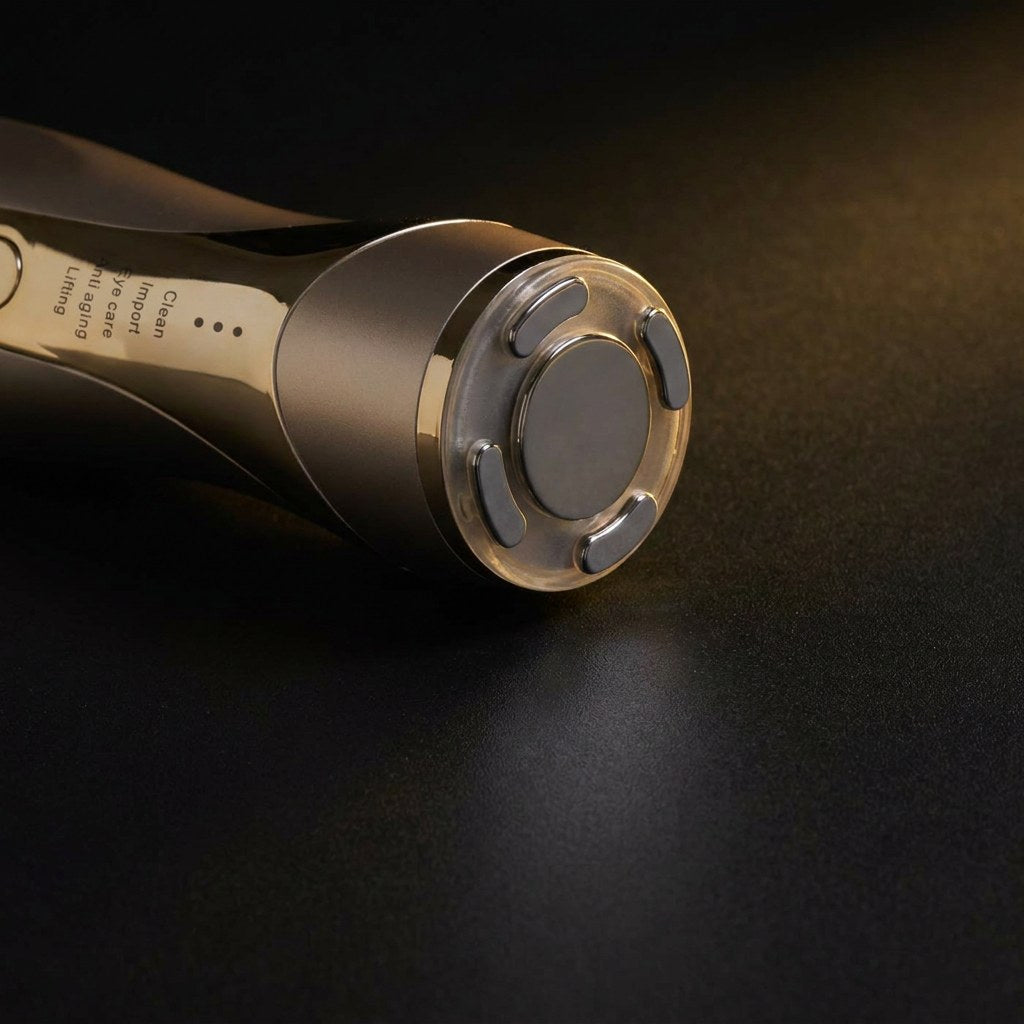
RF microneedling and at-home RF share one word and do different jobs. RF microneedling (Morpheus8, Vivace, Potenza and others) is a clinic procedure that uses needles to deliver radiofrequency deep into the skin, treating texture, acne scarring and laxity together, with real downtime and a cost in the thousands. At-home RF is a gentle, needle-free, no-downtime routine for the look of firmness, used two or three times a week indefinitely. If your main concern is scarring or texture, you need the clinic. If it is firmness and maintenance, you need the routine. Many people use both.
What does RF microneedling do?
A handpiece with a grid of fine needles punctures the skin to a controlled depth (typically 1 to 4mm, deeper on the body) and delivers radiofrequency energy from the needle tips directly into the deeper layers. Two things happen at once:
- The needles create controlled micro-injuries that trigger the skin’s renewal response, which is what improves texture, pores and acne scars.
- The RF energy heats the deeper tissue at the target depth, which is what improves the look of firmness and laxity.
Because the energy is delivered at depth rather than through the surface, RF microneedling can reach layers that surface RF cannot, and it can treat the skin’s surface at the same time. It is done under topical numbing, takes thirty to sixty minutes, and is usually a course of three sessions a month apart.
How much does Morpheus8 cost?
Morpheus8 is the best-known brand of RF microneedling. Typical US pricing:
- Per session, face: $1,000 to $1,800.
- Face and neck: $1,500 to $2,500.
- Recommended course of three: $3,000 to $6,000.
- Maintenance: one session every 12 to 18 months.
Other systems (Vivace, Potenza, Genius, Secret RF) sit in a similar range.
What at-home RF does
An at-home RF device passes radiofrequency through the surface of the skin with a conductive gel, warming the deeper layers to a comfortable temperature. There are no needles and no downtime. Over weeks of consistent use, skin looks firmer, smoother and tighter. It does nothing for scarring or texture in the way needles do, because it does not create the renewal injury.
SKINFOUNDRY Halo uses bipolar RF at 1MHz with a maximum output of 7 watts and a maximum surface temperature of 40 degrees Celsius. That is a fraction of a clinic system’s energy, delivered far more often: five minutes per mode, two to three sessions a week. The device also includes EMS for muscle tone, ultrasonic and sonic vibration, and LED, so the routine addresses the muscle layer that RF microneedling does not touch. SKINFOUNDRY Halo is a cosmetic device for home use, and results vary. The technology is explained on Our Science.
Side by side
| RF microneedling (clinic) | At-home RF | |
|---|---|---|
| Delivers energy | Through needles, at depth | Through the surface |
| Treats | Texture, scars, pores, laxity | Look of firmness and smoothness |
| Muscle tone | No | Yes, if the device includes EMS |
| Downtime | 2 to 5 days of redness, possible pinpoint marks | None |
| Discomfort | Moderate, with numbing | Comfortable warmth |
| Cost | $3,000 to $6,000 per course | $300 to $600 once |
| Results appear | 4 to 12 weeks after the course | 4 to 12 weeks of consistent use |
| Lasts | 12 to 18 months, then repeat | As long as you use it |
| Risk | Burns, pigmentation change, scarring in wrong hands | Minimal with gel and a moving device |
Is RF microneedling worth it?
For the right concern, yes. If you have acne scarring, enlarged pores, rough texture or moderate laxity and you want a meaningful change from a defined course, RF microneedling is one of the most effective non-surgical options available. The downtime is manageable and the results are well documented.
It is not worth it if your concern is early laxity or maintenance. Paying for a needle procedure to do what consistent home RF and skincare can do is spending clinic money on a home-routine problem. And it is not a one-time fix: the skin keeps aging, so the course is repeated.
Is RF better than microneedling?
They target different things. Plain microneedling (no RF) works on texture and scarring through the renewal response. RF works on firmness through heat. RF microneedling combines them. At-home, RF is the gentle, no-downtime firmness option, and at-home microneedling is best avoided: it carries real infection risk and is difficult to do safely and consistently.
Can you do RF microneedling at home?
No. Devices that puncture the skin to depth and deliver energy through the needles are clinic equipment, and consumer “RF microneedling” gadgets are either surface RF with a textured head or shallow rollers, neither of which is the clinic procedure. Surface RF at home is safe and effective for firmness. Leave needles to professionals.
How to combine them
The common pattern that makes sense:
- A course of RF microneedling for scarring, texture and laxity, if those are your concerns.
- An at-home RF and EMS routine starting two to four weeks after the last session, once skin has settled, to maintain the look of firmness and add the muscle-toning layer.
- Skincare underneath both: sunscreen, retinoid on non-device nights, peptides and niacinamide.
The home routine extends the time between clinic courses and keeps the result visible. The full menu of options, with costs, is in Non-surgical skin tightening: every option compared, and a plain guide to home RF is in Radiofrequency skin tightening at home.
Frequently asked questions
How long do RF microneedling results last? Typically 12 to 18 months after a course of three, longer with a home maintenance routine and good sun protection.
Is RF microneedling painful? Uncomfortable rather than painful under topical numbing. Deeper settings are more intense.
Can I use my at-home RF device right after Morpheus8? Wait until the skin has fully healed, usually two to four weeks, and check with your provider.
Which is better for jowls? For skin laxity along the jaw, both help. For the muscle component of jowls, only a device with EMS addresses it. For structural loss, neither does; that is filler or surgery.
Is at-home RF a waste of money if I do Morpheus8? The opposite. It is the maintenance layer that keeps the result, and the only one that adds muscle toning.
SKINFOUNDRY Halo is a cosmetic device for home use. It is not intended to diagnose, treat, cure or prevent any disease. Results vary. Clinic pricing is indicative and varies by provider. Morpheus8 and other brand names belong to their respective owners and are referenced for comparison only.