Filler improves the look of jowls by rebuilding the structure around them, not by tightening the skin. Placed along the jawline, chin and sometimes the cheeks, it gives the jowl less to hang over, so the jawline reads straighter. It costs roughly $1,500 to $4,000 for a jawline course, lasts around a year, and has to be repeated. At-home RF and EMS devices work on the other half of the problem, the skin and muscle, cost a few hundred dollars once, and need to be used consistently. Here is how they compare and why many people use both.
Prices are typical US figures at the time of writing and vary by city and injector.
What jowls are, in one paragraph
Jowls are the soft tissue that settles along the lower jaw as the face ages. They come from four changes at once: skin loses collagen and elasticity, facial fat pads slide downward, the muscles along the jaw and neck lose tone, and the jawbone and chin lose some projection. Any treatment addresses some of those four. None addresses all of them. The full explanation is in What are jowls and what helps.
Do fillers help with jowls?
Yes, by changing the frame rather than the skin. An injector places hyaluronic acid or calcium-based filler in three places:
- Along the jawline, in front of and behind the jowl, to create a straighter line so the jowl is less visible as a dip.
- In the chin, to project it forward and stretch the skin of the lower face slightly.
- In the mid-cheek, in some cases, to re-support tissue that has slid downward.
The result is a more defined jawline and a jowl that looks smaller. The skin itself is not tighter and the muscles are not more toned; the geometry around the jowl has changed.
How much does jawline filler cost?
- Per syringe: roughly $700 to $1,500 depending on product and injector.
- Jawline plus chin course: typically 2 to 4 syringes, so $1,500 to $4,000 or more.
- Maintenance: most people repeat every 12 to 18 months, sometimes with a smaller top-up.
Over five years, a jawline filler routine commonly runs $7,000 to $15,000.
How long does jowl filler last?
Hyaluronic acid fillers in the jawline last around 12 to 18 months, longer than in the lips because the area moves less. Calcium-based fillers can last similar or slightly longer. Results fade gradually rather than disappearing at once.
Can filler make jowls worse?
It can, if too much is placed or it is placed too low. Filler adds volume and weight. Over years, overfilled lower faces can look heavier, and weight in the wrong place drags. Choosing an experienced injector who is willing to say “less” matters more than the product. Filler also does nothing to slow the underlying loosening, so the skin and muscle continue to change beneath it.
How at-home RF and EMS devices compare
At-home devices address the two layers filler does not touch:
- Radiofrequency warms the deeper skin so it looks firmer and tighter along the jaw over weeks of use.
- EMS and microcurrent work the muscles that hold the jawline up so it looks more lifted and toned.
They do not add structure. A jaw that has lost bone projection or fat support will still show that. What they do is improve how firm and lifted the skin and muscle look, and slow further loosening, which is the part filler leaves alone.
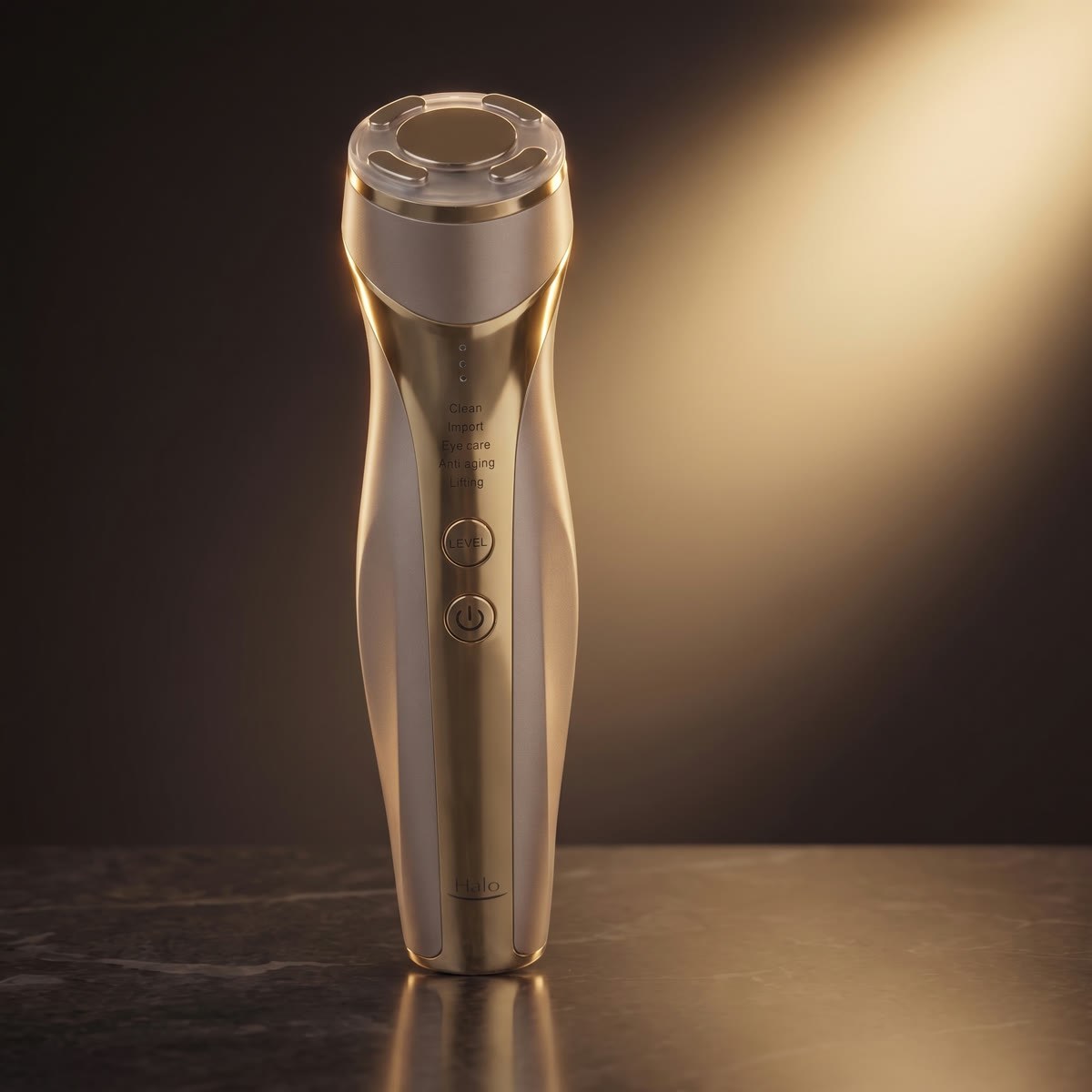
SKINFOUNDRY Halo combines bipolar RF, EMS, ultrasonic, sonic vibration and LED in one device with five timed modes. The Lifting mode pairs ultrasonic with EMS and vibration for the jaw and neck; the Anti-aging mode runs RF for firmness. Five minutes per mode, two to three sessions a week, and at least four weeks before judging. It is used with SKINFOUNDRY Lumis, a conductive treatment gel with a peptide complex, niacinamide, tranexamic acid, vitamin C and hyaluronic acid. SKINFOUNDRY Halo is a cosmetic device for home use, and results vary.
Side by side
| Jawline filler | At-home RF and EMS | |
|---|---|---|
| What it changes | Structure around the jowl | Look of skin firmness and muscle tone |
| Cost | $1,500 to $4,000 per course | $300 to $600 once |
| Time to see it | Immediate, settles in two weeks | Four to twelve weeks |
| Lasts | 12 to 18 months, then repeat | As long as you keep using it |
| Downtime | Some swelling or bruising for days | None |
| Risk | Overfilling, asymmetry, rare vascular complications | Minimal with gel and a moving device |
| Slows further loosening | No | Supports firmness over time |
| Five-year cost | $7,000 to $15,000 | Device plus gel refills, well under $1,000 |
What is the best non-surgical treatment for jowls?
For most people, a combination. Filler for structure if the chin or jawline has lost projection. An at-home RF and EMS routine for the skin and muscle, used continuously so the improvement holds between any clinic visits. Clinic RF or ultrasound once a year if laxity is moderate. The full range of options is compared in Non-surgical skin tightening: every option compared.
The honest hierarchy: skincare and sunscreen are the base, a home device is the daily-driver, filler is the structural fix, and surgery is the only thing that physically moves tissue.
How to decide
- If your jawline has lost definition but the skin is still reasonably firm: filler will make the biggest visible difference, and a home device will maintain the skin around it.
- If the skin is crepey and soft along the jaw: start with RF and EMS. Filler under loose skin looks heavy.
- If both: a home device first for eight to twelve weeks, then a filler consultation with a clearer view of what is structural.
- If budget is the constraint: a home device plus consistent skincare gives the most change per dollar and never wears off.
Frequently asked questions
Where do they inject filler for jowls? Along the jawline in front of and behind the jowl, in the chin, and sometimes in the mid-cheek. Not into the jowl itself, which would add weight.
Can I use an RF device if I have filler? Generally yes once the filler has settled, usually two weeks, but ask your injector. Avoid running RF directly over freshly placed filler.
Does filler dissolve if I use RF? Home RF devices operate at low energy and there is no good evidence they meaningfully affect settled filler. Clinic-level heat treatments are a question for your injector.
Will jowls come back after filler? The jowl never left; the frame around it changed. As filler fades, the appearance returns. This is why maintenance is needed and why addressing skin and muscle alongside it makes sense.
Is there a permanent fix for jowls? Only surgery repositions tissue. Everything else is maintenance, at different costs and intervals.
SKINFOUNDRY Halo is a cosmetic device for home use. It is not intended to diagnose, treat, cure or prevent any disease. Results vary. Filler pricing and longevity are indicative and vary by product, provider and individual. Consult a qualified injector.